
Hong Kong
China
Hong Kong Port is located on the coast of the South China Sea, on the eastern side of the Pearl River Estuary. It is one of the busiest and most international container ports in the world. Relying on Victoria Harbour, a natural deep-water harbor, it boasts broad waters and excellent shelter, remaining calm throughout the year and rarely suffering direct hits from typhoons. Hong Kong Port borders Shenzhen to the north, overlooks Macau and Zhuhai to the west, and faces the South China Sea shipping lanes to the south. Its geographical position is extremely critical, serving not only as an important gateway connecting Mainland China with the international market but also as a core hub in the Asian and even global trade network.
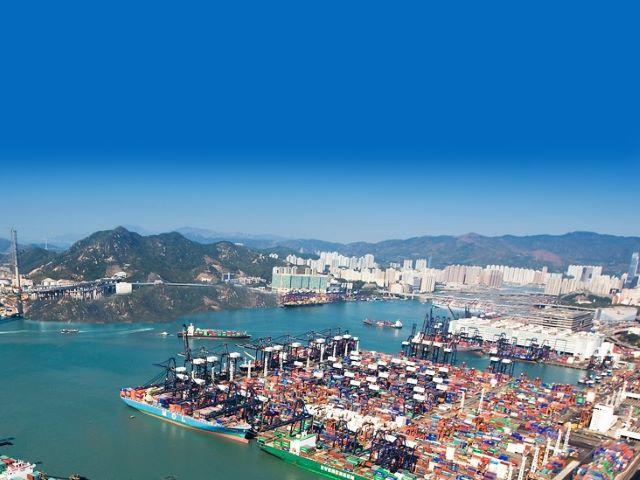
Hong Kong Port is vast in scale, mainly consisting of the Kwai Tsing Container Terminal, Stonecutters Island Container Terminal, Western Container Terminal, and various bulk cargo, oil, and passenger terminals. The Kwai Tsing Container Terminal is built around nine modern container berths, equipped with ultra-deep-water quays capable of handling the world's largest ultra-large container vessels around the clock. The yard area behind the terminal exceeds two million square meters, equipped with advanced gantry cranes, quayside cranes, refrigerated container plugs, automatic gates, and intelligent scheduling systems, enabling efficient handling of over 30 natural boxes per hour. Additionally, Hong Kong boasts a comprehensive network of feeder barge terminals, river cargo terminals, and sea-air intermodal facilities, supporting the port's integrated operational system. The entire port area handles approximately 18 million TEUs annually, with cargo throughput consistently ranking among the world's top, and it maintains a zero-tariff free port policy, attracting major shipping companies worldwide to establish regional headquarters or route hubs here.
Leveraging the immense capacity of Hong Kong Port, all major global liner companies have established dense route networks here. Taking the Transpacific route as an example, the voyage from Hong Kong to North American West Coast ports like Los Angeles, Long Beach, and Vancouver takes only 11 to 14 days; to East Coast ports like New York and Savannah, it takes about 22 to 25 days. For European routes, via the Suez Canal, direct access to major ports like Rotterdam, Hamburg, Antwerp, and Felixstowe takes approximately 23 to 28 days. Southeast Asian routes are an undisputed strength for Hong Kong Port, with voyages to major ports like Singapore, Port Klang, Laem Chabang, Ho Chi Minh City, Manila, and Jakarta typically taking 2 to 5 days, offering extremely high frequencies with multiple sailings almost daily. Furthermore, Hong Kong Port radiates across the entire East Asia region, boasting dense feeder networks connecting with ports like Shanghai, Ningbo, Kaohsiung, Busan, Tokyo, and Kobe. As a vital hub for Southeast Asian routes, transshipment cargo at Hong Kong Port can be rapidly distributed to dozens of secondary ports in countries such as Vietnam, Thailand, Malaysia, Indonesia, and the Philippines, fully meeting the logistics demands of the region's manufacturing and consumer markets.
The reason Hong Kong Port has become a globally recognized international shipping center lies in its irreplaceable advantages and unique characteristics. First is the free port policy, which imposes no tariffs and no quota restrictions on the entry, storage, and transshipment of goods, greatly reducing trade costs and procedural complexity. Second, Hong Kong possesses an independent legal system, an efficient and clean government, and business rules aligned with international standards. Port operations are transparent and customs clearance efficiency is extremely high, with the average dwell time for cargo at the port being only a few hours. Moreover, the hinterland of Hong Kong Port covers China's South China region, one of the most developed manufacturing areas globally, while also being closely connected to the mainland through the Pearl River water system and land transport. A large volume of export goods are either transshipped or directly loaded at the port via Hong Kong. Additionally, Hong Kong Port features comprehensive supporting services covering finance, insurance, legal services, ship surveys, ship repair and building, and customs brokerage. Top-tier global shipbrokers, maritime arbitration, and shipping insurance institutions all have established bases here. The port is also equipped with advanced digital information technology, such as intelligent container tracking systems, paperless customs clearance, and blockchain bills of lading, which have significantly improved efficiency across the entire chain. It is worth noting that Hong Kong Port has rich experience in handling emergency situations and adverse weather, with flexible terminal scheduling that can maximally ensure schedule reliability.
Overall, with an annual throughput of approximately 18 million TEUs, Hong Kong Port firmly ranks among the world's top ten container ports. Simultaneously, relying on its free port system, superior geographical location, and mature status as a Southeast Asian route hub, it has become an indispensable key node in international trade. Whether for the global supply chains of large multinational corporations or the import and export businesses of small and medium-sized enterprises, efficient, low-cost, and high-security maritime solutions can be found here.
Bofeng Logistics specializes in providing domestic and international maritime container transport services originating from Hong Kong Port. It can handle direct shipment and transshipment services from Hong Kong to major ports along the South China, East China, North China, and the Yangtze River routes. With ample space and stable schedules, new and existing customers are welcome to call or inquire online. We will tailor the most competitive logistics solution for you.