
Shenzhen Shi
Guangdong Sheng
China
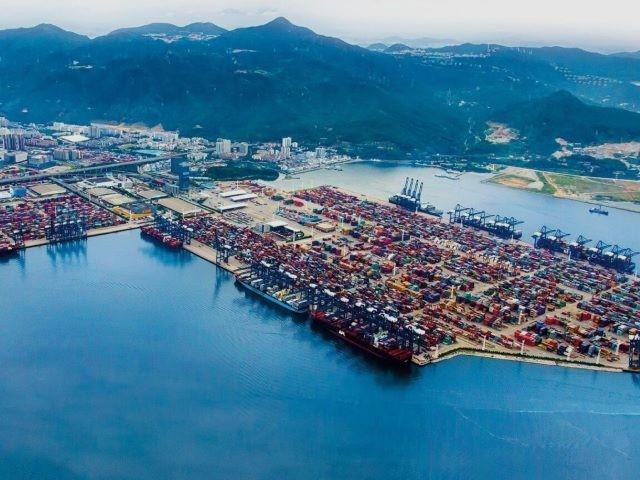
Shenzhen Port, located on the east bank of the Pearl River Estuary in Guangdong Province, China, lies at the core of the Guangdong-Hong Kong-Macao Greater Bay Area. Bordering the South China Sea and adjacent to Hong Kong, it is one of the earliest ports in mainland China to open to the outside world. As one of the world's busiest container ports, Shenzhen Port comprises the Yantian Port Area in the east and the Shekou Port Area in the west. Leveraging Shenzhen, a world-class manufacturing and trade center, it serves as a vital hub connecting China's inland regions with the global market. Its superior geographical location, featuring deepwater channels and natural shelter from wind, enables it to accommodate ultra-large container vessels around the clock, making it an indispensable key node in the international shipping network.
Shenzhen Port's annual container throughput is stable at approximately 29 million TEUs, consistently ranking among the top four globally. The port's total coastline exceeds 40 kilometers, with about 150 berths of various types, including over 80 deepwater berths for vessels of 10,000 tons or more. The Yantian Port Area is the largest deepwater container port in South China, with quay depths ranging from -16 to -18 meters, capable of berthing the world's largest 24,000 TEU-class container ships. It is equipped with ultra-large quay cranes, automated rail-mounted gantry cranes, and other modern handling equipment. The Shekou Port Area is known for its comprehensive functions, featuring a diverse range of berths for containers, breakbulk cargo, and roll-on/roll-off operations, complemented by well-established warehousing, cold chain, and bonded logistics facilities. Additionally, the Dachan Bay Port Area is undergoing continuous expansion, further strengthening Shenzhen Port's overall handling capacity.
Shenzhen Port has opened over 300 international container liner routes, connecting to more than 300 ports in over 100 countries and regions worldwide. Core routes cover major trading regions such as the North American West Coast (Los Angeles, Long Beach), Europe (Hamburg, Rotterdam), Southeast Asia (Singapore, Port Klang, Ho Chi Minh City), the Middle East (Dubai), and Africa. Near-sea routes densely cover Japan, South Korea, Taiwan, Vietnam, Thailand, and other areas, while deep-sea trunk lines generally operate on weekly or bi-weekly schedules. The density of its route network ranks among the highest of global ports. Meanwhile, through the Pearl River water system and inland railway intermodal transport (such as the "Chongqing-Shenzhen Train" and "Ganzhou-Shenzhen Train"), Shenzhen Port extends its hinterland to the Yangtze River basin and the southwestern inland areas, forming a multimodal transport pattern of "sea-rail intermodal" and "water-water transfer."
The core advantage of Shenzhen Port lies in the combination of a deepwater natural harbor and highly efficient operations. The Yantian Port Area, as a natural deepwater port, requires no dredging to accommodate ultra-large vessel calls, significantly reducing vessel waiting times and draft-related costs for shipping companies. The port's level of information technology is extremely high, employing smart gates, vessel traffic management systems, electronic documentation, and more, reducing the average vessel turnaround time to approximately 24 hours, far below the global average. Simultaneously, Shenzhen Port boasts strong industrial chain coordination: surrounding areas are densely populated with container yards, bonded warehouses, customs brokers, freight forwarders, and financial insurance institutions, providing "door-to-door" one-stop logistics solutions. Customs clearance efficiency has long been among the highest in China, enabling seamless multimodal transport connections. Notably, the sea-air intermodal channel between Yantian Port and Hong Kong International Airport offers a rapid transshipment option for high-value-added goods. Furthermore, Shenzhen Port actively pursues a green port initiative, with some quay cranes electrified and berths equipped with shore power facilities, achieving outstanding environmental performance.
Reference data shows that in 2023, Shenzhen Port's container throughput was approximately 29 million TEUs, serving as the core engine of the Pearl River Delta port cluster, with the Yantian Port Area and Shekou Port Area as its two main operational zones. The Yantian Port Area focuses on ultra-large container vessel calls and ocean-going routes to Europe and America, while the Shekou Port Area has advantages in near-sea routes, domestic trade, and ro-ro operations. The complementary division of labor between the two port areas gives Shenzhen Port great resilience in coping with global trade fluctuations. With the advancement of the Guangdong-Hong Kong-Macao Greater Bay Area integration, Shenzhen Port will continue to strengthen its position as an international shipping hub and drive ongoing innovation in smart and green ports.
Bofeng Logistics specializes in providing domestic and international sea freight container transport services departing from Shenzhen Port, covering a route network from the Yantian Port Area and Shekou Port Area to major coastal and inland river ports nationwide, helping to reduce logistics costs and ensure transit efficiency. Feel free to inquire at any time for customized solutions.